

Blog Details
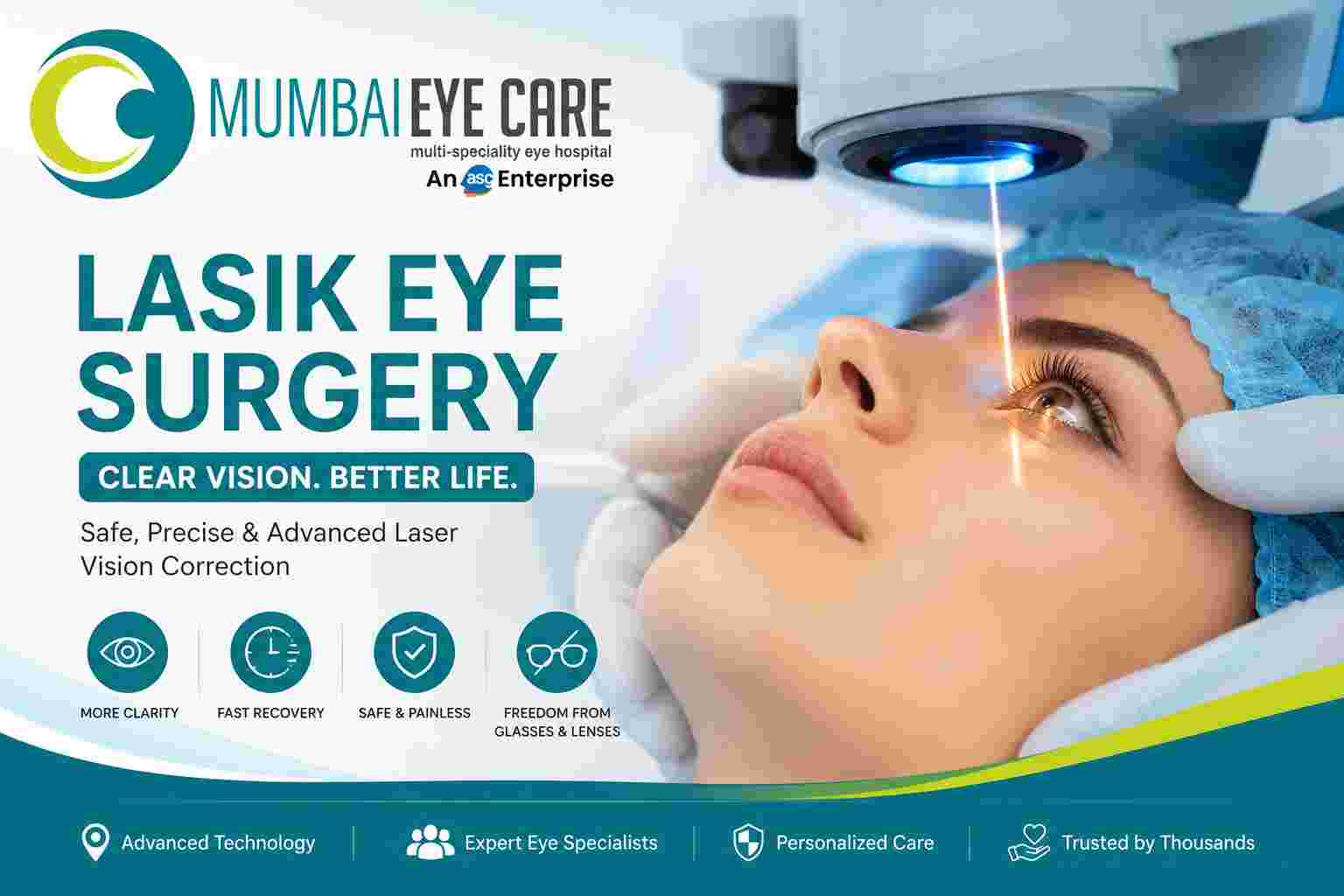
What Is LASIK Eye Surgery and How Does It Work?
What Is LASIK Eye Surgery?
LASIK (Laser-Assisted In Situ Keratomileusis) is one of the most popular vision correction procedures designed to reduce or eliminate dependence on glasses and contact lenses. The procedure uses advanced laser technology to reshape the cornea, allowing light to focus correctly on the retina and improving vision.
Millions of people worldwide have undergone LASIK surgery to correct common refractive errors such as nearsightedness, farsightedness, and astigmatism.
What Is LASIK Eye Surgery?
LASIK is a minimally invasive laser eye surgery that permanently changes the shape of the cornea—the clear front surface of the eye. When the cornea is not shaped correctly, light entering the eye does not focus properly, resulting in blurry vision.
Answer-
LASIK eye surgery is a laser-based procedure that reshapes the cornea to correct vision problems such as myopia, hyperopia, and astigmatism.
How Does LASIK Work?
The cornea plays a crucial role in focusing light onto the retina. LASIK improves vision by modifying the curvature of the cornea.
The procedure involves creating a thin flap in the cornea, lifting it, and using a specialized laser to reshape the underlying tissue. Once the cornea has been reshaped, the flap is repositioned, where it naturally heals without stitches.
Answer-
LASIK works by reshaping the cornea with a laser so that light focuses accurately on the retina, resulting in clearer vision.
Who Is a Good Candidate for LASIK?
You may be a suitable candidate if:
- You are at least 18 years old.
- Your eye power has been stable for at least one year.
- You have healthy corneas.
- You do not have severe dry eye syndrome.
- You are free from serious eye diseases.
An experienced Eye Specialist in Ghatkopar can determine your eligibility through a comprehensive eye examination.
What Vision Problems Can LASIK Treat?
LASIK is commonly used to correct:
Myopia (Nearsightedness)
People can see nearby objects clearly but struggle with distant vision.
Hyperopia (Farsightedness)
People can see distant objects better than nearby objects.
Astigmatism
An irregular corneal shape causes blurred vision at all distances.
Quick Answer
LASIK can effectively treat nearsightedness, farsightedness, and astigmatism.
Step-by-Step LASIK Procedure
- 1. Comprehensive Eye Evaluation – Your surgeon performs detailed measurements and tests to assess corneal thickness, eye health, and vision prescription.
- 2. Eye Preparation – Numbing eye drops are administered to ensure comfort during the procedure.
- 3. Creation of Corneal Flap – A femtosecond laser or microkeratome creates a thin corneal flap.
- 4. Corneal Reshaping – An excimer laser precisely removes microscopic amounts of corneal tissue.
- 5. Flap Repositioning – The flap is placed back into position and begins healing naturally.
- 6. Post-Procedure Assessment – The surgeon evaluates the eye before you are discharged.
Answer-
LASIK surgery typically takes 10–15 minutes per eye and patients usually return home the same day.
Benefits of LASIK Eye Surgery
Reduced Dependence on Glasses
Most patients experience significant freedom from corrective eyewear.
Fast Procedure
The surgery is completed within minutes.
Quick Recovery
Many patients notice improved vision within 24 hours.
Long-Term Results
LASIK offers permanent correction of refractive errors in most cases.
High Success Rate
Modern LASIK procedures achieve excellent visual outcomes for eligible candidates.
Recovery After LASIK
Recovery is generally smooth and rapid.
First 24 Hours
- Mild irritation or dryness
- Improved vision begins
- Rest is recommended
First Week
- Vision continues to stabilize
- Avoid swimming and eye makeup
- Follow medication instructions carefully
First Month
- Most patients achieve stable vision
- Regular follow-up visits are completed
Answer-
Most LASIK patients return to normal daily activities within 24–48 hours.
Risks and Side Effects
Although LASIK is considered safe, potential side effects may include:
- Temporary dry eyes
- Glare or halos around lights
- Light sensitivity
- Fluctuating vision during healing
Serious complications are rare when the procedure is performed by experienced surgeons using modern technology.
Frequently Asked Questions
Is LASIK surgery painful?
No. Numbing eye drops are used, and most patients experience little to no pain.
How long does LASIK take?
The laser portion usually takes less than a minute per eye, while the entire procedure lasts around 15–20 minutes.
Is LASIK permanent?
Yes. The corneal reshaping performed during LASIK is permanent, although natural age-related vision changes can still occur.
Can LASIK remove the need for glasses?
Many patients achieve excellent vision without glasses, though some may still require reading glasses later in life.
What is the best age for LASIK?
Most eye specialists recommend LASIK for adults aged 18 years or older with a stable prescription.
Why Choose Professional LASIK Care?
Selecting an experienced eye surgeon and a well-equipped eye clinic significantly improves safety and outcomes. Advanced diagnostic tools, customized treatment planning, and thorough follow-up care are essential for achieving the best results.
Patients seeking Lasik Eye Surgery in Ghatkopar, Lasik Surgery in Ghatkopar, or consultation with an Eye Specialist in Ghatkopar should choose a center that offers comprehensive evaluations and modern laser technology.
Conclusion
LASIK eye surgery is a safe, effective, and widely trusted solution for correcting refractive vision problems. By reshaping the cornea with advanced laser technology, LASIK helps many patients achieve clearer vision and reduce their dependence on glasses or contact lenses.
If you are considering LASIK Eye Surgery in Ghatkopar, scheduling a professional eye evaluation is the first step toward determining whether the procedure is right for you.